

Heather Kahle
Published: 2026/10/14
1. What is your name and current profession?
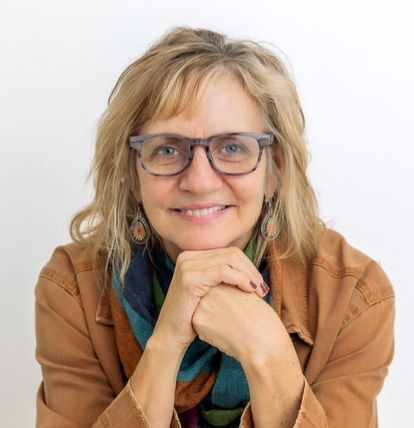
My name is Heather Kahle (“collie”). I am a Human Factors Consultant/Ergonomist/Safety Advisor, and currently Managing Director of Ascent Systems Innovation Group (the consultancy I started in 2024). In my work, I support organizations with human factors/ergonomics (HFE) and systems thinking and organizational learning helping improve all aspects of safety/HFE aspects with special interest (and experience) in investigations, supervisor conversations, JHSCs, inspections and understanding/preventing human-machine interactions.
2. How long have you been an ACE member?
I have been involved with ACE for many years (since I think 1994) and currently serve as National President. ACE has been an important professional home for connection, learning, and advancing the understanding and application of ergonomics and human factors in Canada.
3. How did you first become interested in ergonomics/human factors?
My interest began in a very practical place: working in a car wash and detailing shop. I became curious about the work environment.
I originally thought I might pursue physiotherapy or nursing, so at Waterloo I began in human sciences, studying anatomy, physiology, psychology, and sociology. Then I stumbled across ergonomics, and my coursework expanded into systems design engineering (SYDE). That combination of human sciences and engineering launched my career in human factors and ergonomics.
My 2nd co-op term was at INCO, now Vale, which gave me the opportunity to live at home and work alongside my father. I looked at dusting gold bars (!) and began to understand how HFE could improve real work in real workplaces.
At the University of Waterloo, I was also introduced to forensic and systemic investigation thinking through Professor Kish Hahn. I was hooked. I long dreamed of a job that could afford wearing work boots in the field while also having the opportunity to think, and influence from an office setting. It provided both.
My final co-op term turned into full-time employment with BC Hydro, and a year later I moved to WorkSafeBC, where I spent 30 years. Over time, I became increasingly interested in the broader system that shapes actions, decisions, and outcomes. That led me to Lund University in Sweden, where I completed my MSc in Human Factors and System Safety.
At Lund, I was introduced to Sidney Dekker and to ideas from human factors, systems thinking, sociology, psychology, resilience engineering, and the work of thinkers such as Erik Hollnagel, Karl Weick, Jens Rasmussen, and many others. That experience changed my life and reshaped my professional focus.
After 30 years at WorkSafeBC, I moved into entrepreneurship. One of my largest clients was a global container shipping company based in Vancouver. After a significant marine incident in Hong Kong, the normal response might have been to blame and remove the Captain. Instead, I was invited to lead a systems investigation. Working with senior marine, operations, shore, and vessel staff, we identified more than 10 influencing factors that contributed to the event. The captain, Alex Staicu, is now a friend — and he is still sailing today. That remains one of my proudest professional accomplishments.
Since then, I have had the privilege of applying these concepts in organizations that were paper-heavy and injury-focused, helping them become more curious, engaged, and learning-oriented. When smart, hard-working people are given the tools and space to learn, the outcomes can be amazing.
4. What didn’t you learn in school that you wish you had?
Two things.
First, I wish I had learned much more psychology. Biomechanics is incredibly valuable, but it only takes us so far. Lifting does not start with the brawn; it starts with the brain. How people perceive risk, make decisions, respond to pressure, interpret instructions, and adapt to constraints matters enormously.
Second, I wish there had been more exposure to systems thinking and systems methods in Canada. I would love to see more formal education and applied training in methods such as STAMP/STPA, AcciMap, cognitive task analysis, heuristic analysis, and human reliability analysis methods such as CREAM. These approaches help us move beyond simple explanations and better understand complex work.
5. What is your favorite aspect of being an ergonomist/human factors specialist? What is your favorite aspect of being involved in ergonomics/human factors?
My favourite part is engaging the people who actually do the work and know the work, to understand the work and equip me to influence strategically.
I love creating spaces where workers and supervisors can speak candidly about work: what is going well, what is annoying, where adaptations are needed, where rules do not match reality, and what “know-how” is required to get the job done. Those conversations can transform workplaces. They help organizations learn and become more practical, productive, respectful, and effective.
6. What do you see as the biggest opportunity for ergonomists/human factors practitioners in the future?
The biggest opportunity is establishing the need for human factors and ergonomics around the globe and ensuring we have strong academic programs and centres of excellence to support that work.
We need places where HFE can be applied with rigorous methods by interdisciplinary teams to help industry solve complex, “wicked” problems.
Anna-Kristina Arnold in BC, and many giants before her, have said it well: “We don’t truncate the body at the neck.” Physical ergonomics, material handling, office work, driving, ladder use, equipment design, fatigue, communication, and decision-making all have cognitive and organizational implications. We do a disservice to HFE and to our clients when we compartmentalize.
The future of HFE requires cross-pollination with engineering, safety, design, architecture, psychology to rally be instrumental across industries such as healthcare, transportation, and manufacturing and more.
7. What advice would you give to a student or young professional starting out in ergonomics?
Read, read, read.
A few books I often recommend are:
Scott Snook’s Friendly Fire
Sidney Dekker’s The Field Guide to Understanding Human Error
Edgar Schein’s Humble Inquiry
Amy Edmondson’s The Fearless Organization
Also, get out into the field. Talk to workers. Do walk-through-talk-throughs (not just ‘observations’ – nobody like to be ‘observed’. Stay curious. Ask questions to understand how and what are we learning. The best learning rarely happens from behind a desk alone.
8. Is there anything else you would like to share?
Three points.
First, failure teaches us important things. One memorable personal failure was ignoring dozens of parking tickets because I was convinced I was parked in the right area and that the rules did not apply to me. In hindsight, it taught me that reading the fine print can be helpful — and that humility matters.
Second, understand the story before rushing to fix. Whether we are dealing with relationships, tools, equipment, procedures, or work systems, context matters. We need to understand the situation before jumping to solutions.
Third, ask good questions and go beyond the obvious. In almost every major disaster we know of, there was a slow, often barely noticeable drift toward and eventually beyond the boundaries of safety. Deepwater Horizon, Chernobyl, and even more recent tragic events are easy to explain after the fact by pointing to “human error” or broken parts. But these events do not simply happen. They emerge from dozens of influencing factors, competing priorities, time pressures, trade-offs, and system conditions.
Take courses. Use models. Make time to understand context. Ask how it could have made sense for something to happen. In many major events, no single thing was obviously broken, and yet almost everything was.